
Criminal Court Cases in Westchester County
Westchester County Court is the ordinary felony forum after an indictment or superior-court information. Its criminal office is on the second floor of the Richard J. Daronco Westchester County Courthouse at 111 Dr. Martin Luther King Jr. Boulevard in White Plains. The official Westchester court directory lists the county's court routes. The clerk can be reached at 914-824-5400, with public hours listed as 9 a.m. to 5 p.m. on weekdays. A felony often starts elsewhere, however. A city, town, or village court conducts the first arraignment and preliminary work before the case moves. That local file remains important because it records the opening stage.
Misdemeanors and violations usually remain in the local criminal court. Westchester County has city courts in Mount Vernon, New Rochelle, Peekskill, Rye, White Plains, and Yonkers, plus many town and village justice courts. Use the New York court locator when the municipality is known but the clerk is not. The court, rather than the Westchester County Clerk's general records system or the police department, keeps the filed criminal docket.
Westchester County Criminal Court Routes
The court level turns on the charge and the stage of the prosecution. County Court handles the county's indictable felony cases. Local courts handle misdemeanors, violations, arraignments, and early felony proceedings. A reader who checks only White Plains can therefore miss an open local case or the first docket in a felony matter. The originating municipality, arrest date, and first appearance notice are strong clues when choosing a clerk.
| Case setting | Likely court | Useful contact |
|---|---|---|
| Indicted felony | Westchester County Court | Criminal clerk, 914-824-5400 |
| Misdemeanor or violation | City, town, or village court | Originating local clerk |
| Felony arraignment | Local criminal court first | Local clerk, then County Court |
| Federal prosecution | Southern District of New York | PACER or the federal clerk |
This route also explains why the same event can produce more than one number. A local docket may precede the County Court indictment number. Match the court name, charge, date, and case status instead of assuming that one identifier follows the matter through every stage.
Westchester County Case Record Searches
WebCriminal provides public pending-case and calendar information. Guest access supports defendant, identifier, and calendar routes. It works best when the legal spelling and court are known. Older or disposed records may require the clerk, and sealed cases do not appear. The separate OCA Criminal History Record Search is a paid statewide public-court search using an exact name and date-of-birth match. CHRS is not a DCJS fingerprint rap sheet and has limited town and village disposition coverage.
- Choose defendant, case identifier, or court-calendar mode in WebCriminal.
- Enter the legal name and narrow the search to Westchester County or the known court.
- Use the docket or indictment number when available because it is more precise than a name.
- Open the matching result and compare the court, charges, part, status, and next appearance.
- Ask that court's clerk for the filed paper, plain copy, or certified disposition needed.
| Field label | Type | Required | Use |
|---|---|---|---|
| Last Name | Text | Yes for name mode | Use the legal spelling |
| First Name | Text | Portal-dependent | Narrows common surnames |
| Middle Initial | Text | No | Helps separate similar names |
| County / Court | Dropdown | No | Select Westchester and the likely venue |
| Docket / Indictment | Identifier mode | Alternative | Most reliable when known |
| Calendar Date / Part | Date and filter | Calendar mode | Locates scheduled appearances |
When Westchester Case Search Stalls
WebCriminal may present terms, cookie, CAPTCHA, or JavaScript checks before the form. A blocked screen does not mean the case is sealed or absent. Retry through the official eCourts route, then call the named clerk. If the case has been disposed, ask whether the file is archived and whether retrieval requires advance notice. CourtHelp's court-record instructions direct requesters to the clerk of the court that has the file.
The Westchester County Clerk also operates Westchester Records Online, but WRO warns that its database is separate from the official records in the clerk's office. The WRO login and access notice can help readers recognize that distinction.
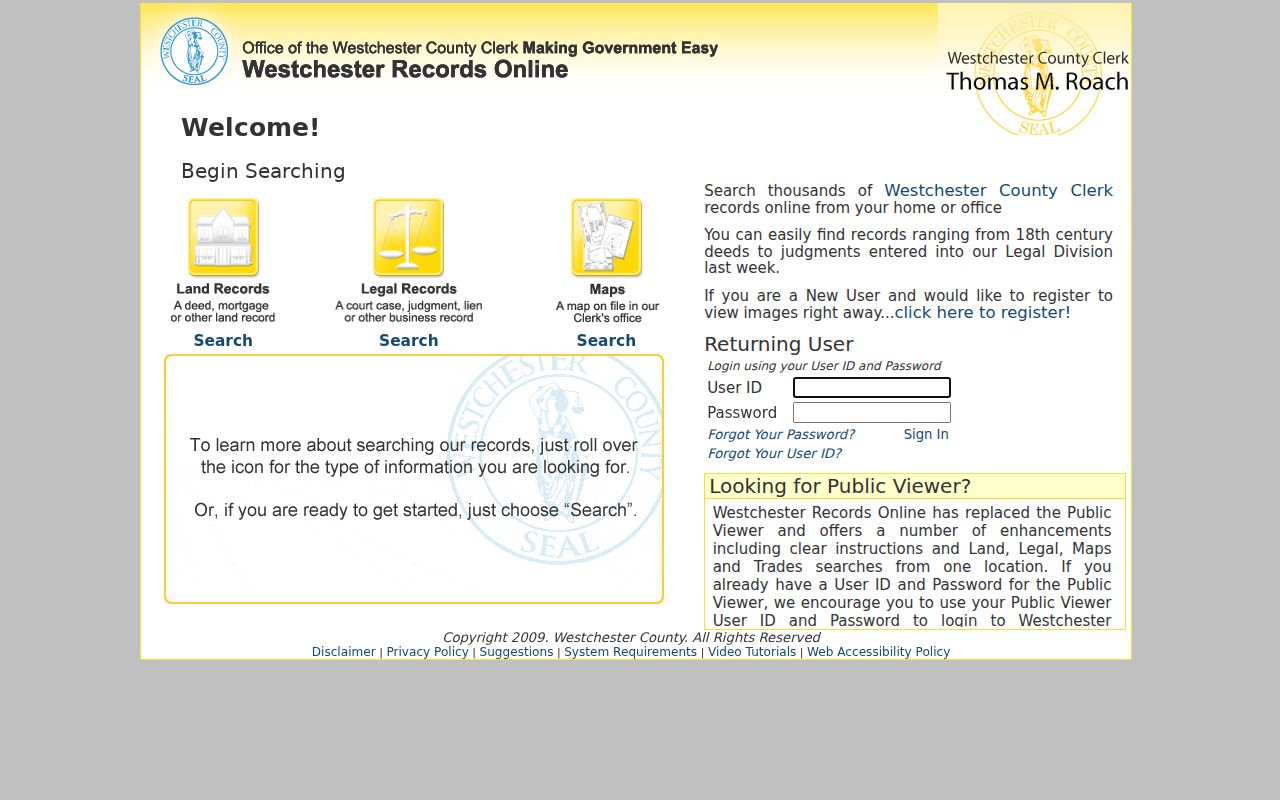
That screen is a useful reminder to confirm a criminal docket with the correct court clerk rather than treating a general county-record account as the case file.
What a Criminal Case File Contains
A public Westchester County criminal case record is document-centered. It can track the accusatory paper, appearances, filed motions or orders, a plea or trial result, and the final sentence. WebCriminal shows index and calendar data, not every document. Grand-jury material, discovery, protected victim data, and confidential reports are not promised by an online result. For a final outcome, ask for the judgment or certificate of disposition rather than relying on the first charge shown at arrest.
| Case Number & Court | Docket or indictment number, venue, part, and case status. |
|---|---|
| Charging Document | Complaint, information, or filed indictment stating the court charges. |
| Docket Entries | Appearances, filed motions, orders, adjournments, and other recorded events. |
| Hearing Dates | Past events and the next appearance when publicly available. |
| Disposition & Judgment | Outcome by count, such as conviction, dismissal, or acquittal. |
| Sentence & Conditions | Incarceration, probation, fine, conditional discharge, or other entered sentence. |
The fingerprint-linked DCJS record summarizes events reported by police, prosecutors, courts, and correction agencies. It does not reproduce all the motions, evidence, or PDF filings in the court case. For broader distinctions among local record types, the Westchester County criminal history overview explains which keeper answers each question.
Reading Westchester Criminal Case Events
Charge, disposition, and sentence are separate events. The accusatory instrument states what was filed. A prosecutor may later reduce, add, replace, or decline a count. The disposition records what happened to each charge, while the sentence records the consequence after a conviction. Reading only the first charge can misstate the result. Read the docket in date order and match each outcome to the correct count.
- Arraignment
- The first court proceeding where charges are stated and plea or release issues are addressed.
- Disposition
- The outcome of a charge or the case, including conviction, dismissal, or acquittal.
- Indictment
- A grand-jury accusation that ordinarily moves a felony into County Court.
- ACD
- An adjournment in contemplation of dismissal that may become a dismissal if its conditions are met.
- Certificate of disposition
- A clerk-certified statement of the court outcome, useful when an index entry is not enough.
Use a certified disposition when correcting a missing or wrong outcome on one's own DCJS record. The court file is the source for the filed result; DCJS supplies a challenge process for a state record that does not match it.
Criminal Case Stages in Westchester County
A Westchester County felony often crosses two courts. Police file the opening charge in a local court, which conducts arraignment and early proceedings. The district attorney may then present the matter to a grand jury. After indictment, County Court receives the felony case. Misdemeanors ordinarily remain with the local court. A plea can end the case before trial, while a verdict is followed by disposition and, if there is a conviction, sentencing.
Case flow: Charges Filed › Arraignment › Pretrial › Plea or Trial › Disposition › Sentencing
Each point can create a public docket entry, but timing and access vary. A bench warrant may be recorded after a failure to appear, yet no verified countywide warrant portal exists. Check that status with the exact issuing court. A portal entry can lag behind an order, so confirm that a warrant was vacated directly with the clerk.
Westchester County Treatment Court Cases
Drug-treatment courts operate in Mount Vernon, New Rochelle, Westchester County Court, Peekskill, White Plains, and Yonkers. These are supervised case programs, not separate public databases. The underlying case stays with the participating court, and the ordinary docket remains the place to confirm appearances and disposition. Program participation should not be inferred from a missing or limited online result.
The official treatment-court directory identifies the venues. Call the clerk for the case record and follow any court instructions about access to protected treatment material. A public disposition can show the legal outcome without opening confidential clinical details. This distinction preserves useful court access while respecting records that the public docket does not expose.
Access Rules for Case Records
New York court files are not ordinary county-agency FOIL records. Judiciary Law §255 directs clerks to search and certify court records subject to law and court rules. Ask the court clerk for an existing file or paper. Do not send a police FOIL form to obtain a court judgment. The clerk may charge for copies or certification, but the current Westchester criminal-copy fee was not established in the research, so confirm the amount before ordering.
Sealed cases, youthful-offender adjudications, Family Court matters, grand-jury proceedings, and protected personal details are restricted. A no-result screen can reflect a sealed matter, an older archive, the wrong court, spelling, or a portal gap. It is not proof that an event did or did not occur. CPL 160.50 generally seals a case ending in favor of the accused. Clean Slate and other sealing laws can also remove eligible matters from ordinary public view.
Clerk route: Use WebCriminal for an index, then request the needed paper from the court that created the docket. A police report and a DCJS rap sheet are different records.
Federal Criminal Cases in Westchester
Federal prosecutions from Westchester County are filed in the Southern District of New York, not in WebCriminal or County Court. The Charles L. Brieant Jr. Federal Building and U.S. Courthouse is at 300 Quarropas Street in White Plains. Federal dockets and filed papers are accessed through PACER, which requires an account and applies the federal judiciary's current fee schedule.
The official PACER page shows the federal case-access channel and account route.
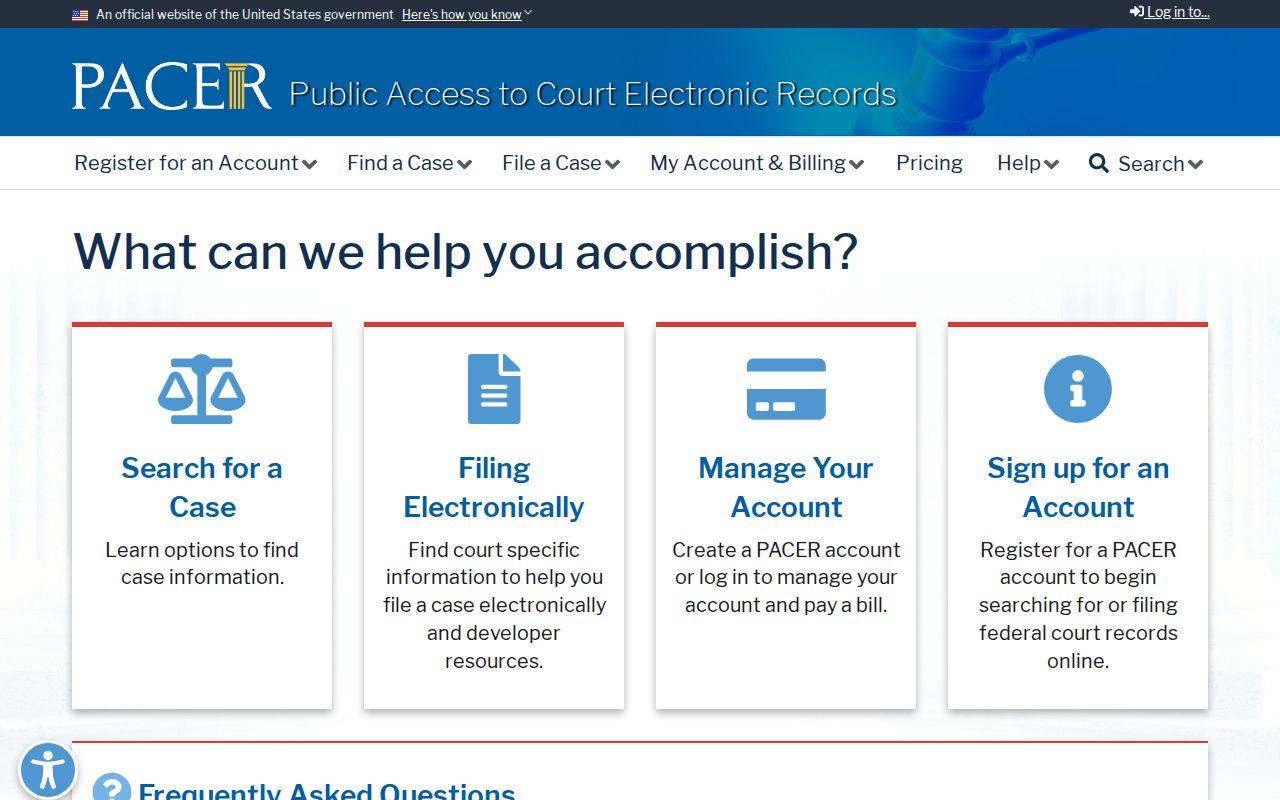
This federal layer matters when a name appears nowhere in Westchester County court results because federal and state dockets are kept in different systems.